



What Causes Cosmetic Tube Leakage During Storage and Transportation?

We are a One-Stop Service Customized cosmetic packaging factory, and have more than 20 years rich experience in customization cosmetic tubes, squeeze tubes, ABL tubes, PBL Tubes, Airless Pump Tubes, Lip gloss Tubes, Skin care Tubes, PCR (Post-consumer recycled) Tube, etc.
Cosmetic tube leakage during storage and transportation is a common packaging problem that can affect product quality, brand reputation, and customer satisfaction. A tube may look perfectly sealed when it leaves the factory, but small amounts of cream, lotion, or gel can escape after weeks in a warehouse or during long-distance shipping.
Why does this happen? In most cases, cosmetic tube leakage is related to several factors working together, including cap sealing performance, tube material compatibility, tail sealing quality, filling conditions, and transportation pressure. Choosing the right cosmetic tube is only part of the solution. The complete packaging system must also be tested with the actual formula under realistic storage and shipping conditions.
For cosmetic brands and packaging buyers, understanding these causes before mass production can help prevent product returns, packaging complaints, and unnecessary costs.
Where Does Cosmetic Tube Leakage Usually Occur?
Before identifying the cause, it is important to determine exactly where the product is escaping. Different leakage locations usually indicate different packaging problems.
Cap and nozzle area: Leakage around the cap or dispensing opening often indicates an insufficient seal, an incorrectly fitted closure, product residue on the sealing surface, or a damaged dispensing component.
Tube shoulder and neck: The shoulder connects the tube body to the neck and cap. If this area has structural defects, poor bonding, or excessive stress, product may escape around the connection.
Tube tail: The tail is the sealed end opposite the dispensing opening. Incomplete sealing, contamination during filling, or inconsistent sealing conditions can create small channels through which liquid gradually escapes.
Tube body: Leakage from the tube wall may result from cracks, pinholes, material damage, or incompatibility between the packaging material and the cosmetic formulation.
Identifying the leakage location first helps manufacturers and brands avoid changing the wrong packaging component. For example, replacing a cap will not solve a problem caused by an incomplete tail seal.
Why Do Cosmetic Tube Caps Cause Leakage?
The cap is one of the most important components in a cosmetic squeeze tube packaging system. It must remain securely attached, maintain proper contact with the sealing surface, and prevent the formula from escaping when the package is stored in different positions.
Several cap-related problems can cause leakage:
Incorrect cap and tube neck matching: The cap dimensions, thread structure, and neck design must be compatible. If the cap does not fit the tube neck correctly, the connection may not provide sufficient sealing pressure.
Insufficient closure performance: A screw cap that is not tightened properly may leave a small gap. Excessive tightening can also damage threads or sealing components, depending on the closure design.
Damaged sealing surfaces: Scratches, deformation, molding defects, or contamination around the opening can prevent the cap from forming a consistent seal.
Unintended opening during transportation: Repeated movement, vibration, or pressure from other packages may affect poorly secured closures, especially when the packaging has not been tested under actual shipping conditions.
Brands should select the closure according to the formula, dispensing method, and distribution environment. Function Packaging offers different cosmetic tube cap designs, including screw caps, flip-top caps, and pump closures, allowing buyers to compare different packaging structures for their products.
How Can Flip-Top Caps and Screw Caps Affect Sealing Performance?
Different closure designs have different sealing characteristics. The best option depends on how the cosmetic product is used and how it will be transported.
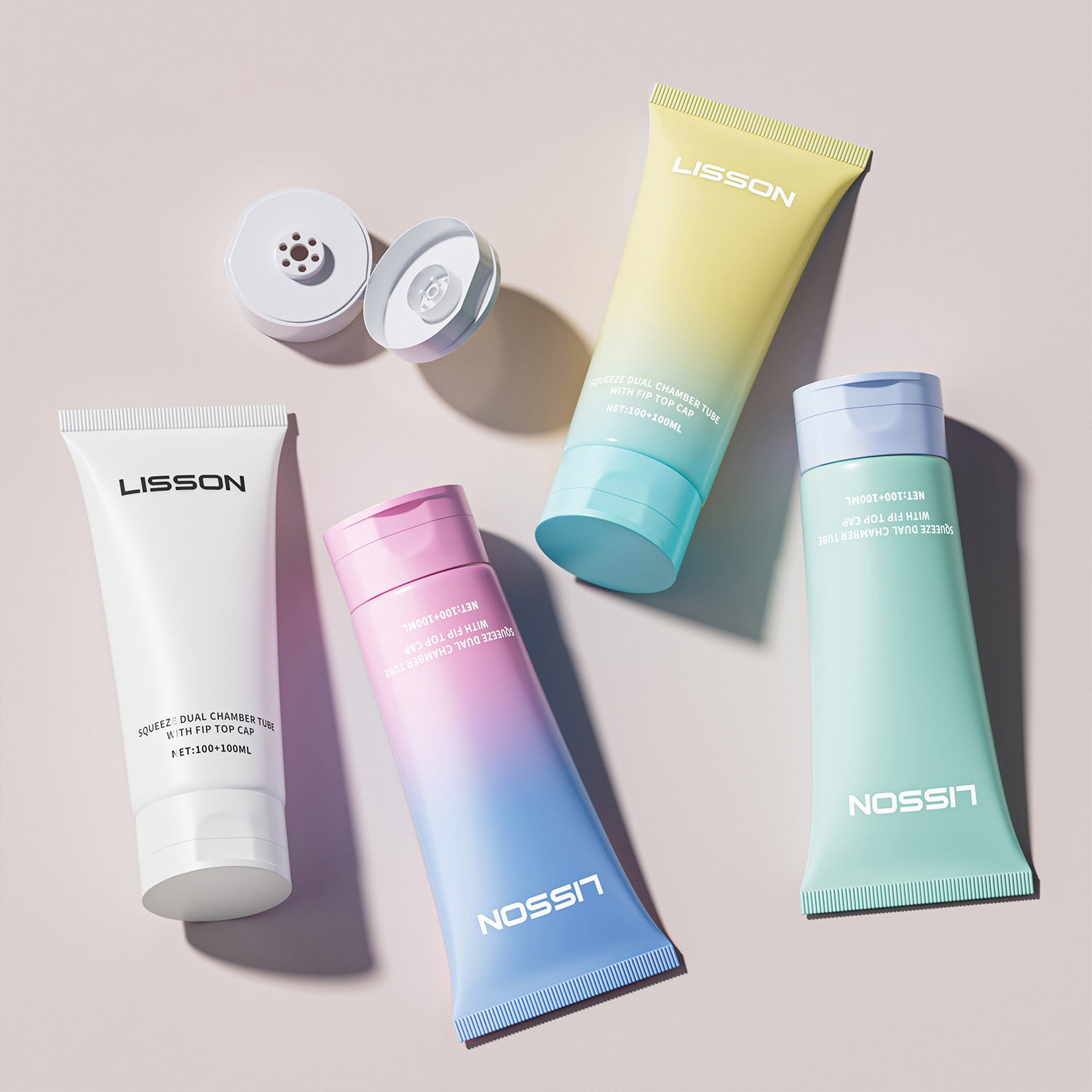
Flip-top caps are commonly used for facial cleansers, body lotions, shampoos, and other personal care products. Their hinged opening provides convenient access, but the closure must fit securely and the dispensing orifice must be compatible with the formula.
Screw caps use a threaded connection to secure the tube opening. Their performance depends on correct thread dimensions, consistent manufacturing tolerances, and appropriate tightening during filling and assembly.
Pump caps contain additional dispensing components. Leakage may occur around the pump connection, internal valve, or dispensing outlet if the assembly is not properly matched to the formulation.
For example, Function Packaging's Custom PE Cosmetic Tube with Double Color Flip Top Cap combines a PE tube body with a PP and TPE cap structure. Its product specifications provide a practical reference for brands developing customized skincare and personal care packaging.
When evaluating a new closure, buyers should check whether the cap remains properly closed after repeated opening and closing, whether the dispensing outlet retains product residue, and whether the complete package maintains its seal during storage.
Can Poor Tube Tail Sealing Cause Cosmetic Product Leakage?
Yes. The tube tail is another critical sealing area, particularly for PE and laminated cosmetic tubes.
During production, the tube is filled through its open tail before the end is sealed. If the sealing process is not properly controlled, the finished package may contain weak areas or tiny channels that allow the formula to escape.
Common reasons include:
Product contamination: Cream, lotion, or gel remaining on the inner sealing surface can interfere with the bonding process.
Inconsistent sealing temperature: If the temperature is too low, the material may not bond sufficiently. Excessive heat may damage the tube structure or affect the appearance and strength of the seal.
Incorrect sealing pressure or time: Pressure and processing time must match the material structure and tube specifications. Inconsistent conditions can create uneven sealing results.
Uneven tube positioning: If the tube is not correctly positioned during sealing, the finished tail may have an irregular shape or insufficient bonding in certain areas.
For brands ordering custom cosmetic tubes, it is important to evaluate the finished tail seal rather than checking appearance alone. Seal integrity should be verified through suitable leakage and mechanical performance tests on filled samples.
How Does Cosmetic Formula Compatibility Affect Tube Leakage?
A cosmetic tube may perform well with one formulation but develop problems when used with another. This is why packaging compatibility testing should be completed before mass production.
Different formulas contain different combinations of oils, surfactants, solvents, emulsifiers, preservatives, and active ingredients. These components may interact differently with the tube body, cap, liner, or other packaging components.
Potential compatibility problems include:
Material swelling or softening: Certain ingredients may affect packaging materials over time, potentially changing the dimensions or mechanical properties of the tube or closure.
Stress cracking: Some chemical formulations may increase the risk of cracks when the packaging is also exposed to mechanical stress.
Seal performance changes: Formula residue around the neck, dispensing outlet, or sealing surface may affect closure performance, particularly if the formulation is highly oily or leaves deposits.
Changes in formula viscosity: Temperature-related changes in viscosity can influence how easily a product flows through the dispensing opening. A thinner formula may reveal weaknesses that are less noticeable with a thicker cream.
This is especially important for products such as sunscreen, facial serums, cleansing gels, moisturizing creams, and specialized treatment formulas.
Function Packaging provides different skincare tube packaging solutions for different cosmetic applications. Brands should confirm material and closure compatibility using the actual formula rather than relying only on general material descriptions.
Why Does Cosmetic Tube Leakage Increase During Transportation?
A cosmetic tube that passes an initial inspection may still develop leakage during long-distance transportation. This is because shipping exposes packaging to conditions that are different from normal shelf storage.
Temperature fluctuations: High temperatures can change the viscosity of cosmetic formulations and increase internal pressure in a sealed package. Temperature changes during transit may also affect the dimensions and mechanical behavior of packaging components.
Air pressure changes: Air transportation and changes in altitude can create pressure differences between the package interior and the surrounding environment. If the packaging system has weak sealing points, these differences may increase the risk of leakage.
Compression from stacked cartons: When cartons are stacked during warehousing or shipping, excessive external pressure may deform tubes or place stress on the cap and shoulder areas.
Continuous vibration: Trucks, containers, and other transportation methods expose products to repeated movement. Poorly secured closures and weak packaging structures may become more vulnerable over time.
Incorrect packaging orientation: If tubes are packed without considering their closure design, formula viscosity, and shipping conditions, product may remain in contact with the dispensing opening for extended periods.
These problems are not always caused by defective packaging materials. Sometimes, the packaging is suitable for normal use but has not been validated for the actual distribution environment.
For international cosmetic packaging projects, brands should consider storage temperature, transportation duration, carton arrangement, stacking conditions, and shipping methods during the packaging development stage.
Does Tube Material Influence Leakage Resistance?
Yes. The tube material and overall construction affect flexibility, barrier performance, chemical compatibility, and resistance to mechanical damage.
PE tubes: Polyethylene tubes are widely used for skincare and personal care products because of their flexibility and convenient squeeze performance. However, the selected PE structure, wall thickness, and closure design must be suitable for the intended formula and distribution conditions.
ABL tubes: Aluminum Barrier Laminate tubes combine plastic and aluminum barrier layers. They are suitable for applications where protection against light, oxygen, and moisture is important. The laminate structure and sealing process should be evaluated together to ensure reliable packaging performance.
PBL tubes: Plastic Barrier Laminate tubes use multilayer plastic structures to provide specific barrier properties. Their performance depends on the material combination, layer construction, and compatibility with the product.
For brands comparing different packaging structures, laminated cosmetic tubes offer additional options for products that require specific barrier and appearance characteristics.
There is no single tube material that prevents every type of leakage. The correct choice depends on formula chemistry, filling conditions, packaging dimensions, closure structure, and expected storage and transportation requirements.
What Tests Can Help Prevent Cosmetic Tube Leakage?
Testing is one of the most effective ways to identify packaging weaknesses before a product enters mass production. Instead of relying on visual inspection alone, brands should evaluate the complete filled package under conditions relevant to its intended use.
Vacuum leakage testing: Vacuum testing can help identify potential leakage paths around the cap, tube body, and sealed areas. The test method and acceptance criteria should be appropriate for the package structure.
Compression testing: This test evaluates how the packaging responds to external pressure, which is particularly relevant for products shipped in stacked cartons.
Drop testing: Filled packages can be exposed to controlled drops to evaluate whether impact damages the cap, shoulder, or tube body.
Temperature cycling: Samples are exposed to selected temperature conditions to observe changes in the formula, packaging dimensions, and sealing performance.
Storage compatibility testing: The actual cosmetic formula is stored in the selected packaging over an appropriate period. Changes in appearance, odor, viscosity, material condition, and leakage should be recorded.
Transportation simulation: Vibration, compression, and other relevant distribution stresses can be simulated to evaluate whether the filled package remains intact throughout transportation.
Function Packaging's product information includes vacuum leakage and material compatibility testing for its customized packaging solutions. For example, these checks are described on its PE cosmetic tube product page. The exact testing plan should still be agreed upon according to the selected product, formulation, and project requirements.
How Can Cosmetic Brands Reduce Leakage Before Mass Production?
Preventing leakage is easier when packaging performance is considered from the beginning of product development. Waiting until a large order has been filled and shipped can make corrective action much more expensive.
Before confirming a bulk order, cosmetic brands should pay attention to the following areas:
Choose the correct tube and closure combination. Confirm the tube material, neck dimensions, cap structure, dispensing opening, and sealing requirements according to the actual cosmetic formula.
Test samples with the actual formulation. Water, oil, gel, cream, and high-viscosity products can behave differently inside the same packaging structure. Sample testing should use the intended formula whenever possible.
Confirm filling and sealing conditions. The filling equipment, product temperature, filling volume, tail sealing parameters, and assembly process should be reviewed before production.
Inspect production samples. Check the cap fit, tube body, shoulder connection, tail seal, and overall appearance. Any abnormal deformation or inconsistent sealing should be investigated.
Validate the transportation packaging. Evaluate the finished product together with its inner packaging, cartons, and shipping arrangement. A cosmetic tube should be tested as part of the complete shipping package.
Maintain consistent quality standards. Inspection requirements and acceptance criteria should be clearly defined so that samples and mass-produced packaging are evaluated using the same standards.
Working with an experienced cosmetic packaging manufacturer can help brands coordinate tube selection, customized closure development, sample evaluation, and production requirements in one packaging project.
How to Identify the Cause of a Leaking Cosmetic Tube
When leakage occurs, brands should avoid immediately replacing the entire packaging design. A more practical approach is to investigate the problem according to where and when the leakage appears.
If leakage occurs around the cap: Check the cap fit, thread dimensions, dispensing opening, sealing surface, and closure assembly.
If leakage occurs at the tube tail: Review the sealing temperature, pressure, processing time, tube positioning, and possible formula contamination.
If leakage occurs through the tube body: Inspect for pinholes, cracks, material damage, and possible formula incompatibility.
If leakage only occurs during transportation: Review temperature changes, air pressure, carton compression, vibration, and package orientation.
If leakage develops after extended storage: Investigate long-term material compatibility, closure stability, formula changes, and the performance of the complete package over time.
Brands should also record the product batch, filling date, storage conditions, transportation route, and leakage location. These details make it easier for the packaging supplier and filling facility to identify the root cause and determine the appropriate corrective action.
Frequently Asked Questions About Cosmetic Tube Leakage
Why do cosmetic tubes leak even when the caps are tightly closed?
A tightly closed cap does not automatically guarantee a leak-proof package. Leakage may come from damaged threads, an incompatible sealing structure, a defective dispensing opening, tube shoulder damage, or an incomplete tail seal. The entire packaging system should be inspected.
Can high temperatures cause cosmetic squeeze tubes to leak?
Yes. High temperatures can change formula viscosity, increase internal pressure, and affect the mechanical properties of packaging components. The actual risk depends on the formulation, tube material, closure design, and exposure conditions.
Are PE cosmetic tubes suitable for liquid skincare products?
PE cosmetic tubes can be used for different skincare and personal care applications, but suitability depends on the formula, tube construction, dispensing opening, and closure design. Compatibility and leakage testing should be completed before mass production.
Which is better for preventing leakage, a flip-top cap or a screw cap?
Neither closure type is universally better. A flip-top cap offers convenient one-handed use, while a screw cap provides a threaded closure. Both require correct structural matching and performance testing with the intended cosmetic formula.
How do manufacturers test cosmetic tubes for leakage?
Common evaluation methods include vacuum leakage testing, compression testing, drop testing, temperature cycling, storage compatibility testing, and transportation simulation. The appropriate combination depends on the packaging structure and intended distribution conditions.
Should cosmetic brands test filled tubes before international shipping?
Yes. Filled tubes should be evaluated under conditions relevant to the intended shipping route. Temperature fluctuations, pressure changes, vibration, and carton compression can all affect packaging performance during international transportation.
Can changing the tube material solve a leakage problem?
Sometimes, but not always. If leakage is caused by an incorrectly matched cap, poor tail sealing, or unsuitable filling conditions, changing the tube material alone will not solve the problem. The actual leakage location and root cause should be identified first.
Choose Cosmetic Tube Packaging That Performs Beyond the Shelf
Cosmetic tube leakage during storage and transportation is rarely caused by just one factor. Cap sealing, tube construction, formula compatibility, filling conditions, and distribution environments all influence the final packaging performance.
For cosmetic brands, the most reliable approach is to evaluate the complete filled package before mass production. Selecting suitable materials, matching the closure to the tube structure, checking tail sealing quality, and conducting relevant transportation tests can significantly reduce the risk of leakage-related problems.
Function Packaging provides customized cosmetic packaging solutions, including PE tubes, laminated tubes, skincare tubes, and different cap configurations. With packaging development and manufacturing support, brands can evaluate suitable structures for their formulations, product positioning, and distribution requirements.
If you are developing a new skincare or personal care product, contact Function Packaging to discuss your tube dimensions, formula characteristics, closure requirements, and customization needs. Choosing the right packaging structure at the development stage helps build a more reliable product for storage, transportation, and everyday use.