



Sugarcane-Based Plastic vs Conventional PE: Which Is Better for Cosmetic Packaging?

We are a One-Stop Service Customized cosmetic packaging factory, and have more than 20 years rich experience in customization cosmetic tubes, squeeze tubes, ABL tubes, PBL Tubes, Airless Pump Tubes, Lip gloss Tubes, Skin care Tubes, PCR (Post-consumer recycled) Tube, etc.
Sugarcane-based plastic and conventional polyethylene (PE) are both suitable materials for flexible cosmetic squeeze tubes, but they differ in their raw material sources. Sugarcane-based PE is produced using renewable sugarcane-derived ethanol instead of fossil-based feedstocks, while conventional PE is generally made from petroleum or natural gas. Because both materials have the same polyethylene polymer structure, bio-based PE can offer comparable flexibility, durability and moisture resistance. The better choice depends on a brand's sustainability targets, packaging specifications, product compatibility and sourcing requirements.
For skincare and personal care brands, choosing between these materials involves more than comparing environmental claims. Tube performance, manufacturing compatibility, decoration options, recycling infrastructure and total packaging costs should all be considered before selecting a material for commercial production.
What Is Sugarcane-Based Plastic in Cosmetic Packaging?
Sugarcane-based plastic, commonly called bio-based PE or sugarcane polyethylene, is a renewable-feedstock alternative to conventional petroleum-based polyethylene. The manufacturing process starts with sugarcane, which is processed to produce sugar or fermentable sugars. These are converted into ethanol, which is subsequently dehydrated to produce ethylene. The ethylene is then polymerized into polyethylene resin.
The resulting material is chemically the same type of polyethylene as conventional PE. This is an important distinction: sugarcane-based PE is not automatically biodegradable or compostable. It is a bio-based plastic that uses renewable feedstock while retaining the properties associated with PE.
For cosmetic packaging manufacturers, this provides an opportunity to introduce renewable raw materials without necessarily redesigning the entire tube structure or changing established dispensing formats.
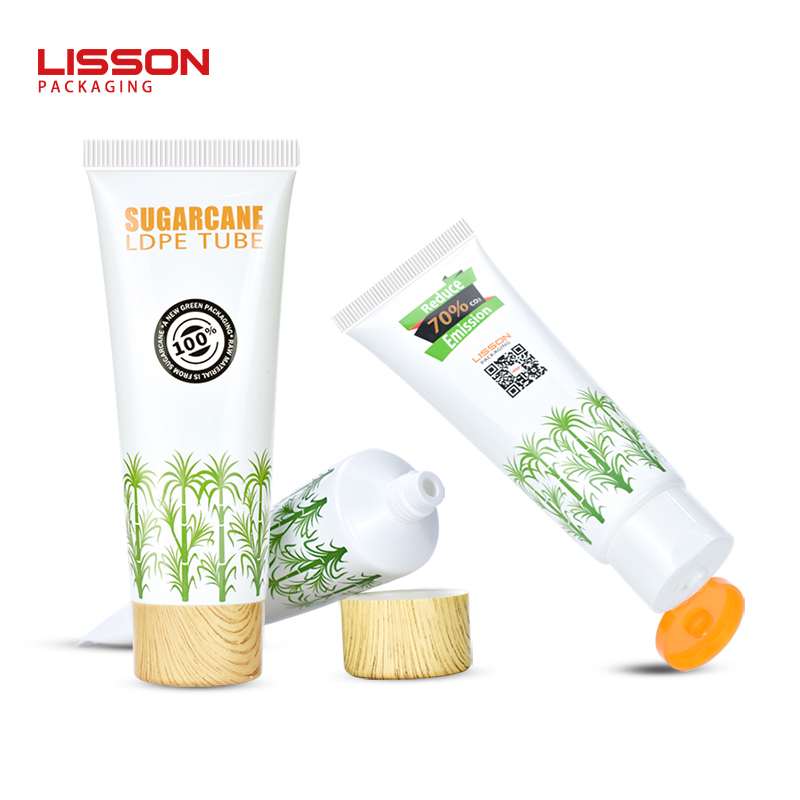
Function Packaging offers customized sugarcane-based cosmetic tubes in different diameters, capacities, colors and surface finishes. These options allow beauty brands to explore renewable material sourcing while maintaining flexibility in packaging design.
Conventional PE: A Proven Material for Cosmetic Squeeze Tubes
Polyethylene is one of the most widely used materials in flexible cosmetic packaging. Its combination of flexibility, lightweight construction, moisture resistance and processing versatility makes it suitable for many skincare and personal care applications.
Conventional PE cosmetic tubes are commonly used for:
- Facial cleansers: Flexible tube walls allow convenient dispensing of cleansing gels and creams.
- Hand creams: PE provides a lightweight, squeezable structure for everyday personal care products.
- Body lotions: Different tube diameters and capacities support a range of dispensing requirements.
- Sunscreen: PE tubes can be designed with suitable closures and structures for sunscreen formulations.
- Hair care products: Shampoos, conditioners and styling creams can be packaged in compatible PE tube structures.
Another advantage is manufacturing familiarity. Conventional PE is widely available, and established production processes support different tube diameters, wall thicknesses, cap designs, printing methods and surface treatments.
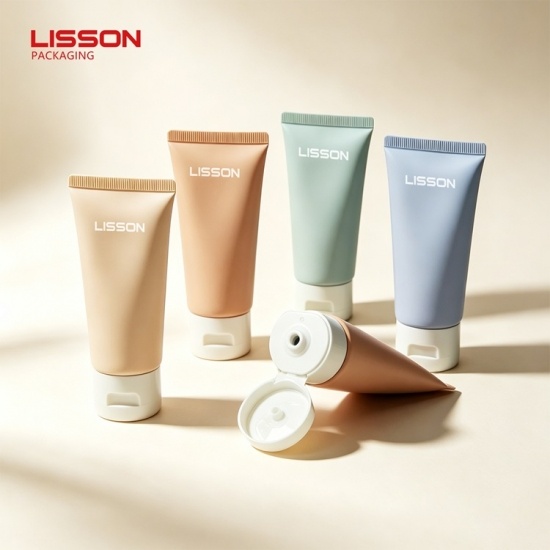
For brands prioritizing established packaging materials, reliable production processes and flexible customization, conventional PE remains a practical solution. Function Packaging provides customized PE tube options for different cosmetic applications and packaging requirements.
Sugarcane-Based PE vs. Conventional PE: Key Differences
Although the two materials have different feedstock origins, their shared polyethylene chemistry means that many core packaging characteristics can be comparable.
| Comparison | Sugarcane-Based PE | Conventional PE |
|---|---|---|
| Raw material | Sugarcane-derived ethanol | Petroleum or natural gas |
| Polymer type | Polyethylene | Polyethylene |
| Flexibility | Comparable PE properties | Established flexibility |
| Moisture resistance | Comparable at equivalent grades | Good |
| Renewable feedstock | Yes | Generally no |
| Biodegradability | No, not inherently | No |
| Recyclability | Potentially compatible with PE recycling | Potentially compatible with PE recycling |
| Main advantage | Renewable raw material sourcing | Established supply and processing |
The comparison assumes equivalent PE grades and comparable tube structures. Actual performance depends on resin specifications, additives, wall thickness, tube layers, closures and manufacturing conditions. A finished cosmetic package should always be evaluated as a complete system rather than by resin type alone.
Environmental Benefits: Is Sugarcane PE More Sustainable?
The primary environmental advantage of sugarcane-based PE is its renewable feedstock. By replacing fossil-derived ethylene with sugarcane-derived ethylene, manufacturers can reduce dependence on non-renewable raw materials.
Sugarcane plants absorb carbon dioxide during growth. This biogenic carbon is incorporated into the plant material and can subsequently become part of the production process. Depending on agricultural practices, energy sources, processing efficiency and transportation, sugarcane-based PE may offer lower cradle-to-gate greenhouse gas emissions than conventional fossil-based PE.
However, sustainability comparisons should be based on lifecycle assessment (LCA) data rather than general marketing claims. Important factors include:
- Agricultural inputs: Land use, irrigation, fertilizer and harvesting practices.
- Processing energy: The energy required for ethanol production and polymer manufacturing.
- Transportation: The distance between feedstock production, resin processing and packaging factories.
- End-of-life management: Whether the finished tube can enter an appropriate recycling stream.
- Packaging construction: The proportion of bio-based PE used in the complete package, including the cap and other components.
Brands should request supplier-specific environmental documentation before communicating a numerical carbon reduction claim. A bio-based material does not automatically make the entire package carbon-neutral or environmentally preferable under every lifecycle scenario.
Recyclability and Cosmetic Formula Compatibility
One practical advantage of bio-based PE is that it retains the chemical identity of polyethylene. When the tube body is made from compatible PE materials, it may be suitable for the same recycling streams as conventional PE.
However, recyclability depends on the complete packaging design. Caps, labels, printing inks, adhesives, barrier layers and other materials can influence sorting and recycling compatibility. Local collection and recycling infrastructure also determines whether a package is actually recovered.
For cosmetic formula compatibility, both sugarcane-based and conventional PE tubes should be tested against the intended formulation. Relevant considerations include:
- Compatibility with oils, surfactants, solvents and active ingredients.
- Potential interaction between the formula and packaging materials.
- Moisture and oxygen barrier requirements.
- Odor and flavor transfer, where relevant.
- Leakage, sealing performance and long-term storage stability.
For sensitive skincare products containing oxidation-prone ingredients, a multilayer structure may be more appropriate than a standard mono-layer PE tube. Five-layer structures incorporating an EVOH barrier can provide enhanced oxygen protection, subject to the actual construction and performance testing.
Function Packaging provides material options including PE, sugarcane-based PE, PCR and laminated structures. This allows brands to evaluate different material combinations according to formulation sensitivity and sustainability targets.
How to Choose the Right Material for Your Cosmetic Tube
There is no single material that works best for every cosmetic product. The selection process should consider both packaging performance and brand objectives.
Choose sugarcane-based PE when:
- Your brand wants to increase renewable raw material content.
- You need a PE-based packaging solution with familiar material characteristics.
- Your sustainability strategy includes reducing dependence on fossil-based feedstocks.
- Your target customers value bio-based packaging materials.
Choose conventional PE when:
- Established material sourcing and cost control are primary considerations.
- Your current packaging design has already been validated with conventional PE.
- You need a familiar material for large-scale cosmetic tube production.
- Your project requires a specific PE grade or processing specification.
For some brands, a gradual transition can be a sensible approach. Start with one product line, test the sugarcane-based material, evaluate packaging performance and customer feedback, and then consider expanding its use across additional product categories.
Custom Sugarcane and PE Cosmetic Tubes from Function Packaging
Function Packaging, operated by Guangzhou Lisson Plastic Co., Ltd., provides customized cosmetic tube packaging for skincare, beauty and personal care brands. Its product portfolio includes conventional PE tubes, sugarcane bio-based tubes, PCR tubes, laminated tubes and customized applicator packaging.
The company's sugarcane tube product range supports different packaging configurations, including:
- Tube diameters from approximately 11mm to 60mm, depending on the selected model.
- Filling capacities ranging from small sample sizes to larger cosmetic formats, with certain models supporting 3ml–400ml.
- Two-layer and five-layer tube structures on selected products.
- Custom colors, logo printing and artwork decoration.
- Matte, glossy, frosted and other surface finishes.
- Screw caps and flip-top closures, depending on the design.

For brands comparing renewable and conventional materials, Function Packaging can help evaluate tube dimensions, capacity, closures, decoration and material configurations according to project requirements. Sample evaluation and formula compatibility testing should be completed before mass production.
Visit Function Packaging to explore customized cosmetic tube packaging solutions and discuss OEM and ODM requirements with the packaging team.
Frequently Asked Questions
1. Is sugarcane-based PE the same as conventional PE?
They share the same polyethylene polymer structure, but their raw material sources differ. Sugarcane-based PE uses renewable sugarcane-derived ethanol, while conventional PE generally uses fossil-based feedstocks.
2. Are sugarcane cosmetic tubes biodegradable?
No. Sugarcane-based PE is not inherently biodegradable or compostable. It remains polyethylene and should be managed through appropriate plastic recycling or waste systems.
3. Can sugarcane-based PE replace conventional PE in cosmetic tubes?
In suitable applications, yes. Because both materials are polyethylene, bio-based PE can offer comparable flexibility and physical properties. Resin grade, tube construction and processing compatibility still need to be verified.
4. Are sugarcane-based cosmetic tubes recyclable?
They can be compatible with PE recycling streams when the complete packaging construction meets local recycling requirements. Caps, labels, barrier layers and collection infrastructure should also be considered.
5. Is sugarcane PE more expensive than conventional PE?
Pricing depends on resin grade, bio-based content, order volume, packaging construction and market conditions. Buyers should compare quotations based on the complete customized tube rather than resin price alone.
6. Can sugarcane-based PE tubes be customized with different printing and caps?
Yes. Depending on the selected tube structure, manufacturers can offer custom colors, logo printing, surface finishes, screw caps and flip-top closures. Final options should be confirmed during project development.
7. Which material is better for sustainable cosmetic packaging?
Sugarcane-based PE is a suitable choice when increasing renewable feedstock content is a priority. Conventional PE remains a practical option for established packaging programs. The better choice depends on lifecycle data, formula compatibility, recycling access and brand sustainability objectives.
Looking for Sustainable Cosmetic Tube Packaging?
Whether you need sugarcane-based PE tubes, conventional PE squeeze tubes or customized sustainable packaging, Function Packaging can help you evaluate material options and develop packaging that fits your product and brand requirements.